
Rear-Flange (FL) Motor Mounting in Linear Slides: How to Eliminate Side Interference in Compact Machines
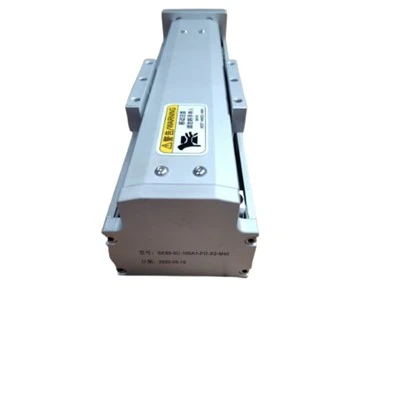
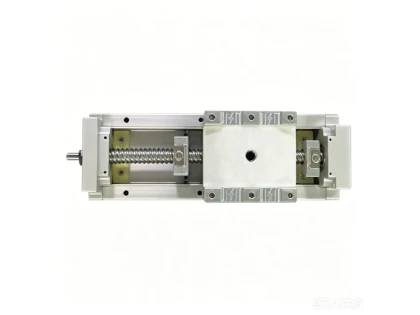
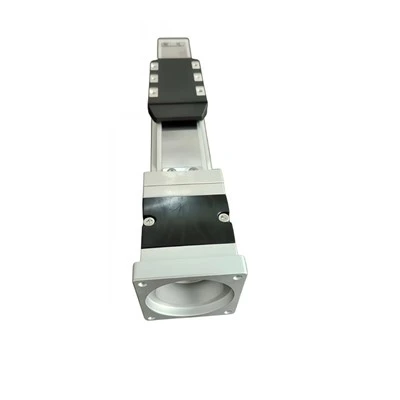
Side-protruding servo/stepper motors create spatial interference in compact relay automation cells, raising overall machine width by 35%–55%. FL rear-flange in-line direct drive aligns motor shaft coaxial with ball screw, removing lateral overhang completely. This mounting structure cuts lost motion below 2 μm and keeps bidirectional repeatability within ±0.005 mm without belt vibration.
Spatial Conflicts in Automation Framing: The challenge of side-protruding stepper/servo motors
- Conventional side-mounted L-bracket motor installation adds 42–78 mm lateral width to linear slides. In relay pick-and-place stations, this expansion forces wider safety guarding and reduces available layout space for PPU mechanisms and ESD static elimination modules.
- Offset side mounting introduces parallel misalignment between motor shaft and screw input shaft. Radial runout exceeds 0.03 mm, generating periodic belt vibration and increasing lost motion to 8–12 μm after 2,000 operating hours.


Spatial Conflicts in Automation Framing: The challenge of side-protruding stepper/servo motors
- Conventional side-mounted L-bracket motor installation adds 42–78 mm lateral width to linear slides. In relay pick-and-place stations, this expansion forces wider safety guarding and reduces available layout space for PPU mechanisms and ESD static elimination modules.
- Download Detailed 3D CAD (.STEP) Models for electric slide table actuator. We provide full dimension drawings for relay assembly cell layout simulation.
Layout Comparison: Footprint savings in compact electronics assembly cells
| Parameter | Side L-Bracket Belt Drive | FL Rear Flange Direct Drive |
|---|---|---|
| Overall Lateral Width | 112–148 mm | 66–82 mm |
| Unidirectional Repeatability | ±0.012 mm | ±0.005 mm |
| Lost Motion | 8–12 μm | ≤2 μm |
| Max Continuous Thrust | 220 N | 245 N |
| Maintenance Interval | 1,500 h (belt tension adjustment) | 6,000 h (no belt parts) |
| Relative Capex | 100% | 108% |
Send your relay production layout drawings to our engineering team to get the full RFQ selection sheet and FAT acceptance specification document. Browse more motion control units on our product category page.