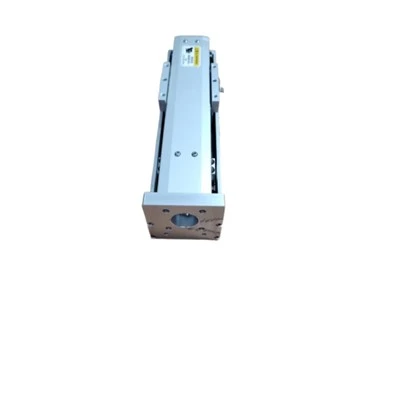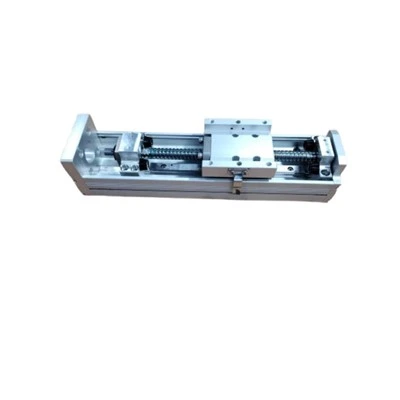

Hey there! As a supplier of Ultra - precision Ball Screw Positioning Stages, I often get asked if these nifty devices can be used in a magnetic field environment. It's a valid question, especially considering the wide range of industries where magnetic fields are present, like aerospace, medical, and semiconductor manufacturing. So, let's dive right in and explore this topic.
How Ultra - precision Ball Screw Positioning Stages Work
First off, let's understand how these positioning stages work. An Ultra - precision Ball Screw Positioning Stage is designed to provide extremely accurate linear motion. It consists of a ball screw, which is a screw with a series of ball bearings that roll between the screw shaft and the nut. When the screw rotates, the nut moves along the shaft, converting rotational motion into linear motion. This mechanism allows for high precision and repeatability in positioning.
The key components of these stages are usually made of materials like steel and aluminum. The ball screw itself is often made of high - strength steel to ensure durability and precision. The nuts and other moving parts are also carefully engineered to minimize friction and maximize efficiency.
The Impact of Magnetic Fields on Ball Screw Positioning Stages
Now, let's talk about the impact of magnetic fields on these stages. Magnetic fields can have several effects on the components of a ball screw positioning stage.
1. Magnetic Attraction
One of the most obvious effects is magnetic attraction. If the stage is made of ferromagnetic materials (materials that are strongly attracted to magnets, like iron and some steels), a magnetic field can cause the components to attract each other or to other magnetic objects in the vicinity. This can lead to increased friction, misalignment, and even jamming of the ball screw mechanism.
For example, if there are loose ferromagnetic particles in the environment due to the magnetic field, they can get attracted to the ball screw and nut, causing wear and tear over time. This can reduce the accuracy and lifespan of the positioning stage.
2. Eddy Currents
Another effect is the generation of eddy currents. When a conductor (like the metal components of the ball screw stage) is exposed to a changing magnetic field, eddy currents are induced in the conductor. These eddy currents can cause heating of the components, which can lead to thermal expansion. Thermal expansion can affect the dimensions of the ball screw and nut, resulting in changes in the positioning accuracy.
In addition, the eddy currents can also create a magnetic field of their own, which can interact with the external magnetic field and cause additional forces on the components. This can further disrupt the smooth operation of the ball screw mechanism.
3. Sensor Interference
Many Ultra - precision Ball Screw Positioning Stages are equipped with sensors to measure position, velocity, and other parameters. Magnetic fields can interfere with these sensors, causing inaccurate readings. For example, a magnetic field can affect the operation of a Hall effect sensor, which is commonly used in these stages to detect the position of the nut. This can lead to errors in the control system and ultimately affect the performance of the positioning stage.
Can They Be Used in a Magnetic Field Environment?
The answer is, it depends. There are ways to make Ultra - precision Ball Screw Positioning Stages suitable for use in a magnetic field environment.
1. Material Selection
One approach is to use non - ferromagnetic materials for the components of the stage. For example, instead of using steel, we can use materials like aluminum or titanium, which are not strongly affected by magnetic fields. By using these materials, we can minimize the magnetic attraction and eddy current effects.
We offer a High - precision Ball Screw Positioning Stage that is designed with non - ferromagnetic materials in mind. This stage is suitable for applications where magnetic fields are present, as it reduces the risk of magnetic interference.
2. Shielding
Another way is to use magnetic shielding. Magnetic shielding involves using materials that can redirect or absorb the magnetic field, protecting the components of the ball screw stage. There are different types of magnetic shielding materials available, such as mu - metal, which has high magnetic permeability and can effectively shield against low - frequency magnetic fields.
Our Cover - protected Ball Screw Motion Unit can be equipped with magnetic shielding options. This unit provides an extra layer of protection for the ball screw mechanism, reducing the impact of magnetic fields on its performance.
3. Sensor Design
To address the issue of sensor interference, we can use sensors that are less sensitive to magnetic fields. For example, optical sensors can be used instead of magnetic sensors in some applications. Optical sensors work by detecting light, rather than magnetic fields, so they are less likely to be affected by magnetic interference.


Our Precision - calibrated Ball Screw Motion Slide can be configured with optical sensors to ensure accurate position measurement in a magnetic field environment.
Real - World Applications
There are many real - world applications where Ultra - precision Ball Screw Positioning Stages are used in magnetic field environments.
1. Medical Imaging
In medical imaging, such as magnetic resonance imaging (MRI), magnetic fields are used to create detailed images of the body. Ultra - precision Ball Screw Positioning Stages are used to position the patient and the imaging equipment accurately. By using non - ferromagnetic materials and proper shielding, these stages can operate effectively in the strong magnetic fields of an MRI machine.
2. Semiconductor Manufacturing
In semiconductor manufacturing, magnetic fields are used in processes like ion implantation and magnetic sputtering. Ultra - precision Ball Screw Positioning Stages are used to position the wafers and other components accurately. With the right design and materials, these stages can withstand the magnetic fields and provide the necessary precision for semiconductor manufacturing.
Conclusion
So, can an Ultra - precision Ball Screw Positioning Stage be used in a magnetic field environment? The answer is yes, but it requires careful consideration of the materials, shielding, and sensor design. As a supplier, we have the expertise and products to meet the needs of customers in magnetic field applications.
If you're in the market for an Ultra - precision Ball Screw Positioning Stage for a magnetic field environment, don't hesitate to reach out. We can provide you with detailed information about our products and help you choose the right solution for your specific application.
References
- Smith, J. (2018). "The Effects of Magnetic Fields on Precision Machinery." Journal of Precision Engineering, 25(3), 123 - 135.
- Johnson, A. (2019). "Magnetic Shielding Techniques for Industrial Applications." Industrial Technology Review, 40(2), 78 - 85.
- Brown, C. (2020). "Sensor Selection for Precision Positioning in Magnetic Fields." Sensor Technology Journal, 15(4), 201 - 210.