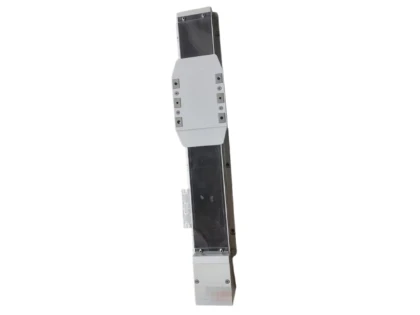
Non-contact capacitive surface potential sensors capture electric field coupling signals without physical contact with target parts. The Panasonic EF-S1 converts field induction into 1–5V analog output, measuring workpiece voltage from 0 to ±1 kV with linear error <3%. It eliminates blind spots from periodic manual inspections and catches transient static spikes on continuously moving relay terminals.

01
The Inadequacy of Handheld Periodic Audits: Why intermittent static spikes slip through
Handheld electrostatic testers only deliver snapshot data at fixed inspection intervals. Transient voltage spikes (200V–800V) generated during PPU pick-and-place, cam indexing and part friction last less than 0.2s. These short-duration anomalies cannot be captured by discontinuous sampling, leading to unplanned ESD breakdown of gold-plated relay contact assemblies.
02
Non-Contact Capacitive Sensing: How the Panasonic EF-S1 detects voltages from 0 to ±1 kV
The EF-S1HS sensing head operates on electrostatic induction and capacitive voltage division. It forms stray coupling capacitance with the charged workpiece and converts induced charge into proportional analog voltage. Two measurement ranges switch automatically with sensing distance: ±1kV for 8.0–20.5mm gap, ±2kV for 21.0–100mm gapPanasonic
03
Dynamic Voltage Threshold Alarming on Indexing Carousels and Rotary Nests
The EF-S1C controller supports programmable upper/lower voltage thresholds with NPN open-collector output. On cam indexing dial and rotary nest stations, the sensor triggers hardwired machine alarms when workpiece potential exceeds ±30V (gold contact threshold). The analog 1–5V signal feeds directly to PLC analog input modules for real-time data logging and OPC UA data upload.
Download sensor wiring diagrams and EMC shielding specifications. Browse our full ESD protection portfolio on Industrial Static Elimination & Microelectronic Assembly