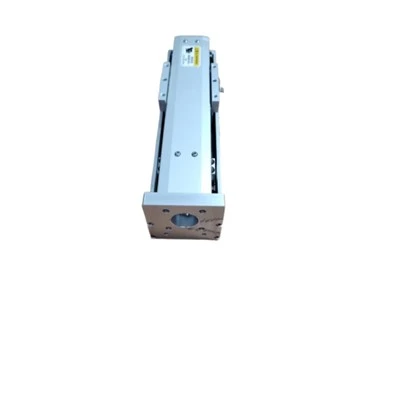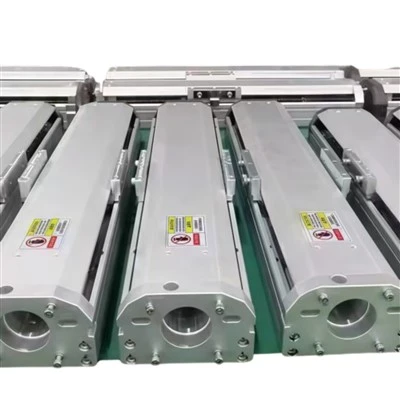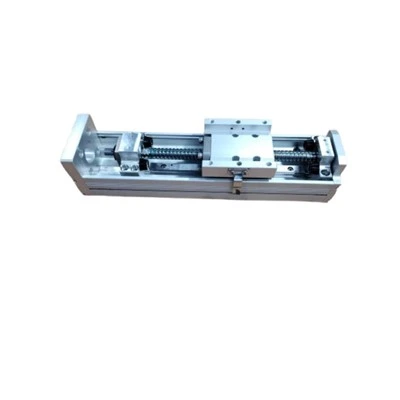

Selecting the appropriate end supports for a left - mounted ball screw linear carriage is a crucial decision that can significantly impact the performance, accuracy, and longevity of your linear motion system. As a trusted supplier of left - mounted ball screw linear carriages, I understand the importance of making the right choice. In this blog post, I will guide you through the key factors to consider when selecting end supports for your left - mounted ball screw linear carriage.
Understanding the Basics of Left - Mounted Ball Screw Linear Carriages
Before delving into the selection of end supports, it's essential to have a clear understanding of left - mounted ball screw linear carriages. These carriages are designed to provide precise linear motion, typically driven by a ball screw. The left - mounted configuration means that the motor or drive mechanism is located on the left side of the carriage, which can be advantageous in certain applications where space or access is a concern.
Our company offers a range of left - mounted ball screw linear carriages, including the Left Side Inline Ball Screw Linear Travel Unit and the Left - end Motorized Ball Screw Linear Actuator. These products are known for their high precision, reliability, and durability.
Key Factors in Selecting End Supports
Load Capacity
One of the most critical factors to consider when selecting end supports is the load capacity. The end supports must be able to withstand the axial and radial loads applied to the ball screw during operation. The load capacity of the end supports depends on several factors, including the size and type of the ball screw, the speed of operation, and the nature of the application.
For example, in a high - speed, high - load application, you may need end supports with a higher load capacity to prevent premature failure. On the other hand, in a low - load, low - speed application, you can choose end supports with a lower load capacity, which may be more cost - effective.
Rigidity
Rigidity is another important factor in the selection of end supports. The end supports must provide sufficient rigidity to minimize deflection and ensure accurate linear motion. A lack of rigidity can lead to vibration, noise, and reduced accuracy, which can affect the performance of your linear motion system.
When evaluating the rigidity of end supports, consider the material, design, and mounting method. For example, end supports made of high - strength materials such as steel or aluminum tend to be more rigid than those made of plastic. Additionally, a well - designed end support with a proper mounting method can provide better rigidity.
Precision
Precision is crucial in many linear motion applications, especially those that require high accuracy. The end supports must be able to maintain the alignment of the ball screw and ensure smooth, precise motion. To achieve high precision, look for end supports with low runout and high concentricity.


Our Right - angle Offset Ball Screw Linear Drive Module is designed to provide high precision and smooth motion, thanks to its carefully engineered end supports.
Lubrication
Proper lubrication is essential for the smooth operation and longevity of the ball screw and end supports. The end supports should be designed to allow for easy lubrication and to retain the lubricant effectively. Some end supports come with built - in lubrication systems, which can simplify the maintenance process.
When selecting end supports, consider the type of lubrication required and the frequency of lubrication. For example, in a high - speed application, you may need a more frequent lubrication schedule, and end supports with a better lubrication retention mechanism may be more suitable.
Installation and Maintenance
The ease of installation and maintenance is also an important consideration. The end supports should be easy to install and align with the ball screw and linear carriage. Additionally, they should be easy to access for maintenance and replacement.
Look for end supports that come with clear installation instructions and that can be installed using common tools. Some end supports are designed for quick and easy replacement, which can minimize downtime in case of a failure.
Types of End Supports
Fixed End Supports
Fixed end supports are used to support the ball screw at one end and prevent axial movement. They are typically used in applications where the ball screw needs to be held in a fixed position. Fixed end supports can be either single - bearing or double - bearing designs, depending on the load requirements.
Floating End Supports
Floating end supports are used at the other end of the ball screw to allow for thermal expansion and contraction. They can move axially to accommodate changes in the length of the ball screw due to temperature variations. Floating end supports are typically designed with a single bearing and a flexible mounting arrangement.
Combination End Supports
In some applications, a combination of fixed and floating end supports may be used. This can provide the best of both worlds, allowing for precise positioning at one end and thermal expansion at the other end.
Application - Specific Considerations
Industrial Automation
In industrial automation applications, where high - speed and high - precision motion are required, the end supports must be able to withstand the demanding operating conditions. Look for end supports with high load capacity, rigidity, and precision. Additionally, consider the need for easy maintenance and replacement, as downtime can be costly in industrial settings.
Medical Equipment
In medical equipment applications, where accuracy and reliability are of utmost importance, the end supports must be designed to meet strict quality standards. Look for end supports that are made of high - quality materials and that can provide smooth, precise motion. Additionally, consider the need for cleanliness and compatibility with medical environments.
Semiconductor Manufacturing
In semiconductor manufacturing applications, where extremely high precision is required, the end supports must be able to provide sub - micron accuracy. Look for end supports with low runout and high concentricity. Additionally, consider the need for vibration isolation and contamination control.
Conclusion
Selecting the appropriate end supports for a left - mounted ball screw linear carriage is a complex decision that requires careful consideration of several factors. By understanding the key factors such as load capacity, rigidity, precision, lubrication, and installation and maintenance, you can make an informed decision that will ensure the optimal performance of your linear motion system.
As a supplier of left - mounted ball screw linear carriages, we are committed to providing our customers with high - quality products and expert advice. If you have any questions or need assistance in selecting the appropriate end supports for your application, please do not hesitate to contact us for procurement and further discussions.
References
- Linear Motion Handbook, published by a leading industry association
- Technical documentation from ball screw and end support manufacturers